
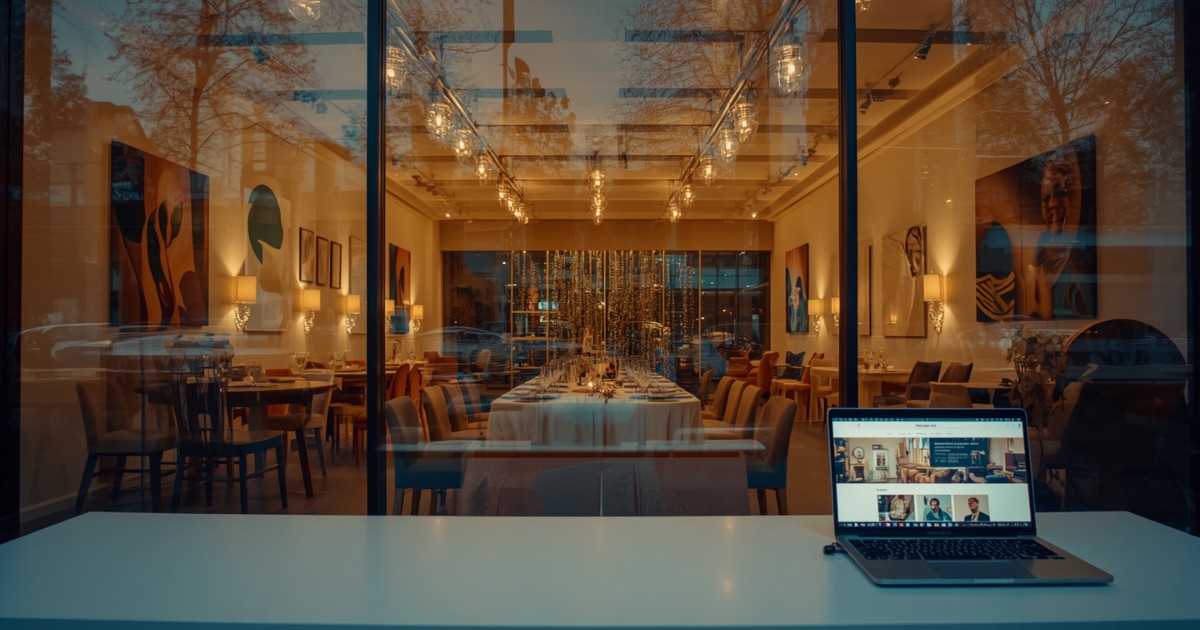
Many event rental businesses treat their website like a digital brochure. A few photos, a list of services, and a contact form.
But a well-built rental website can be much more than that.
When your website is properly connected to your business systems, it becomes a 24/7 sales and operations tool. Customers can browse inventory, build a wishlist, and submit quote requests while your team stays focused on running events, deliveries, and operations.
The key is building your website on a foundation that gives you full ownership and control.
Because your website and domain aren’t just marketing tools — they are long-term business assets.
Your domain name is your digital property.
Think of it the same way you think about your warehouse location or your company name. It’s how customers find you, how Google indexes your business, and how your marketing efforts build long-term value.
Unfortunately, many rental businesses unknowingly allow agencies or website platforms to control their domain or hosting.
That creates risk.
If the relationship with that provider ends, you could lose access to:
Owning your domain ensures your business maintains complete control over your online presence, regardless of who builds or manages your website.
It also protects years of SEO and marketing investment.
Choosing a website platform is only half the equation.
The real power comes from connecting your website to your rental management software.
Modern rental operations rely on software platforms to manage:
Trying to manage this directly on a website quickly becomes unmanageable.
Instead, the best rental websites integrate directly with software solutions like Goodshuffle Pro, allowing the website to display your inventory while your operations stay organized inside the system built to manage them.
When this connection is set up correctly:
This eliminates the need to manually update products across multiple systems.
Your website becomes the customer-facing showroom, while your software remains the operations hub.
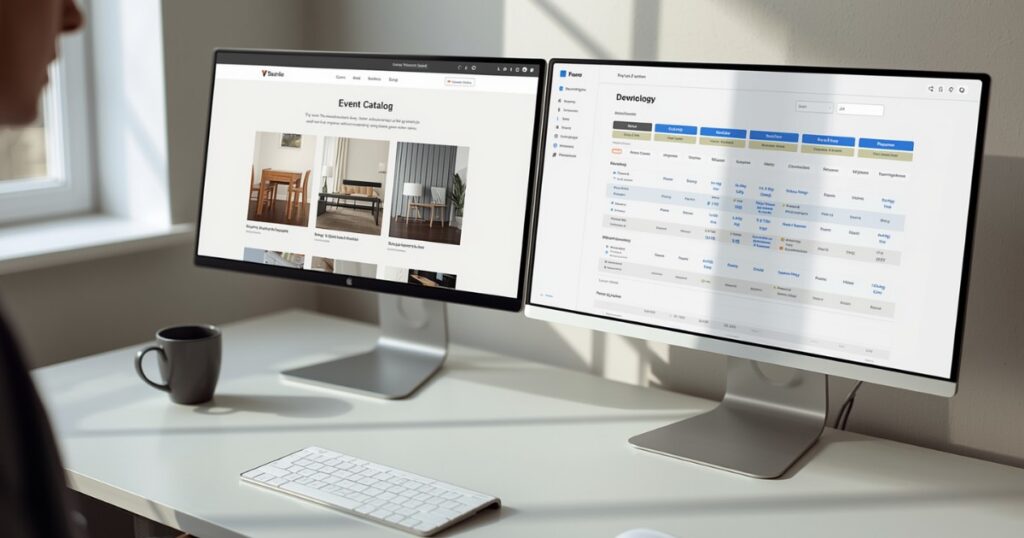
Most event rental businesses evaluating a new website end up comparing three main options.
Each has strengths — and limitations.
Squarespace is a popular starting point for small businesses because it’s easy to use and offers polished templates.
Pros
Cons
Squarespace works best for rental businesses that want a simple informational website without deep integrations.
Wix is another beginner-friendly platform that allows users to build websites visually without coding.
Pros
Cons
For rental businesses planning long-term growth or software integrations, Wix often becomes restrictive.
WordPress powers over 40% of the internet for a reason.
It provides unmatched flexibility, control, and scalability.
Pros
Cons
For rental businesses planning to grow, WordPress often becomes the preferred platform because it allows you to build exactly what your business needs instead of being limited by a template.
A common mistake event rental businesses make is trying to run operations directly through their website.
But rental businesses are far more complex than traditional e-commerce.
You’re managing:
A website alone cannot manage that complexity efficiently.
That’s where rental management software comes in.
Platforms like Goodshuffle Pro are designed specifically to handle the operational side of event rental businesses. Your team manages inventory, quotes, and contracts inside the software, while your website acts as the front door for new customers.
Customers browse inventory online, build a wishlist, and submit a quote request. Your team then reviews the request, confirms availability, and sends the official quote.
This workflow keeps you in control while allowing customers to interact with your business on their own schedule.

Many event rental businesses start by looking for the cheapest website solution.
That’s understandable.
But the true cost of a website isn’t the upfront price — it’s the long-term flexibility and growth potential.
Lower-cost website builders can seem appealing at first, but they often come with hidden limitations:
When businesses outgrow those platforms, they often need to rebuild their entire website.
WordPress websites may require a larger initial investment, but they offer something cheaper builders cannot:
long-term control.
With WordPress, your business owns:
That flexibility allows your website to grow alongside your business rather than forcing you to rebuild later.
Some event rental businesses successfully build their own websites using templates.
But as inventory grows and integrations become more important, working with a developer who understands the rental industry can make a major difference.
Rental-focused developers understand challenges like:
At Twelve Legs Marketing we have deep experience in the rental industry, building WordPress websites and integrating them with rental software platforms to help businesses streamline operations and generate more leads.
Before committing to a website platform, consider these questions:
1. Do you own your domain?
Your domain should always be registered under your business, not your developer or platform.
2. Can your inventory sync automatically?
Your website should connect to your rental software so updates happen automatically.
3. Is the quote request process simple?
Customers should be able to browse inventory and submit requests without unnecessary friction.
4. Can the design grow with your brand?
Your website should evolve with your business, not limit it.
5. Will the platform support your business in two years?
Think ahead to expansion, new inventory categories, or additional locations.
The most successful rental websites aren’t just attractive.
They’re connected to the business behind them.
When your website is built on a flexible platform like WordPress and integrated with software like Goodshuffle Pro, it becomes more than a marketing tool.
It becomes an extension of your operations — helping customers browse inventory, submit requests, and start conversations with your team anytime.
And most importantly, it remains a business asset you control, not a platform you’re locked into.
Because in the rental industry, the businesses that scale fastest are the ones whose systems work together.
Made with 🤍 by Twelve Legs Marketing © 2026 | Privacy Policy | Terms of Service


